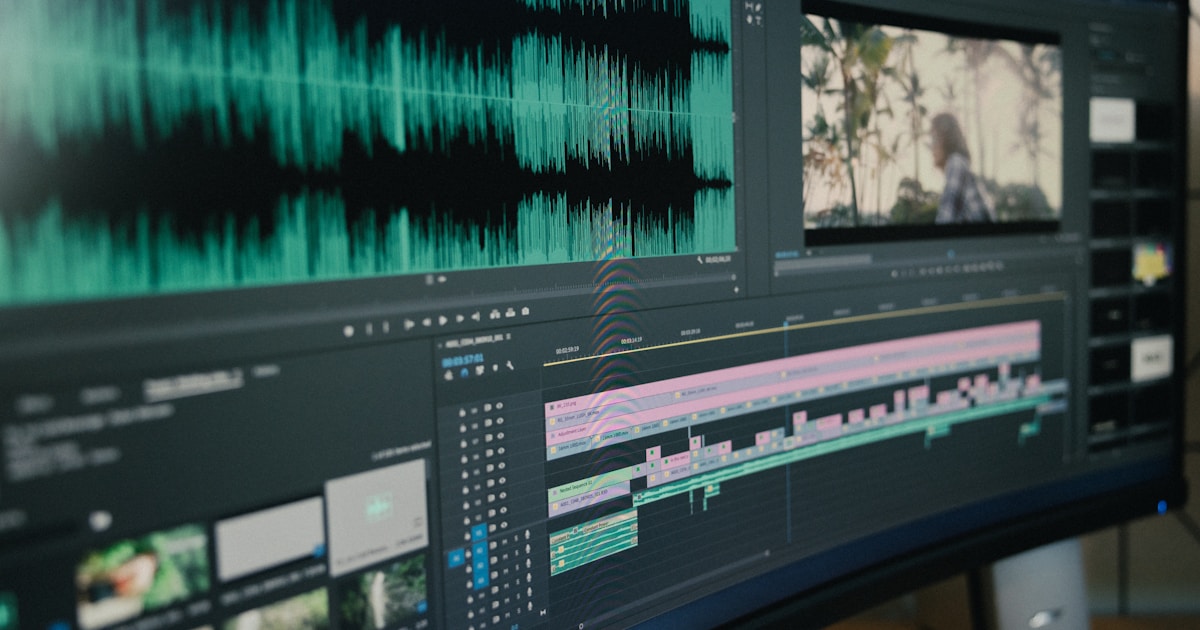

A faceless YouTube channel generates advertising revenue without ever showing the creator on screen. You publish videos on popular topics (fascinating facts, personal development, finance, history) using only images, synthetic voices, and editing. AI now automates 80% of the process: script writing, voiceover generation, visual creation, and subtitling. This method lets you publish 3 to 5 videos per week without a camera, microphone, or editor. About 40% of monetized channels in 2024 use this format according to a TubeBuddy study. This article details every step to launch your faceless AI channel, from choosing a niche to earning your first euro.
Why Choose the Faceless Format in 2025?
The faceless format eliminates three major obstacles of traditional YouTube: camera anxiety, equipment costs, and filming time. You can produce professional-quality content from a laptop without prior technical skills. Faceless channels reach monetization (1,000 subscribers and 4,000 watch hours) on average in 6 to 9 months versus 12 to 18 months for traditional channels, according to Social Blade 2024 data.
Advertisers pay the same CPM (cost per thousand views) as traditional channels. A faceless channel in the finance niche can generate €3 to €8 per 1,000 views, or €300 to €800 monthly for 100,000 views. The format adapts to all topics: science education, book summaries, historical analysis, business advice.
Anonymity protects your privacy while building a sellable digital asset. Platforms like Flippa regularly list faceless channels sold between €20,000 and €150,000 depending on subscriber count and recurring monthly revenue.
Choose a Profitable and Sustainable Niche
A profitable niche combines three criteria: monthly search volume above 10,000 queries, high advertising CPM (above €2), and stable demand over time. Use Google Trends to verify that interest hasn't declined over the last 12 months. Personal finance, personal development, history, and science niches show the best CPM.
Avoid overly competitive topics (gaming, general entertainment) where algorithms favor already-established channels. Prefer a specific sub-niche: instead of "finance," target "real estate investing for beginners" or "save €500 per month." A specialized channel builds better audience loyalty and enjoys higher click-through rates.
Analyze 5 to 10 competing channels with VidIQ or TubeBuddy. Note their most-viewed videos, average length (8 to 12 minutes to maximize ad revenue), and thumbnail style. If three similar channels exceed 50,000 subscribers, the niche is viable. If none exceed 10,000, the market may be too narrow.
Create Scripts with ChatGPT or Claude
A good faceless script runs 8 to 12 minutes (1,200 to 1,800 words), starts with a captivating hook (the first 15 seconds determine 50% of retention), and structures information into 3 to 5 clear sections. Open ChatGPT or Claude and provide this prompt: "Write a 1,500-word YouTube script about [your topic], faceless format. Start with a hook that poses an intriguing question. Structure into 5 parts with smooth transitions. Educational tone, concrete examples, zero jargon."
Read the script aloud to catch overly long sentences or repetitions. AI sometimes generates heavy phrasing: simplify any sentence over 20 words. Add precise numbers ("73% of French people" rather than "many people") to credibilize your points.
Include calls to action every 3 to 4 minutes: "If you like this tip, give it a thumbs up," "Subscribe for more." Channels that explicitly ask for engagement get 30% more likes according to a 2023 Hootsuite study. End with a 30-second conclusion summarizing key points and teasing the next video.
Generate Voiceovers with ElevenLabs or Play.ht
Modern AI voices reach 95% naturalness: intonation, pauses, emphasis on important words. ElevenLabs offers 30 realistic French voices, with a €5 subscription for 30,000 characters monthly (roughly 4 ten-minute videos). Play.ht offers comparable quality at €19 monthly for 12 hours of generated speech.
Paste your script into the interface and select a male or female voice based on your niche (male voices work better for finance and tech, female voices for personal development and health based on A/B tests by established channels). Adjust speed to 1.1x to energize delivery: YouTube favors videos that hold attention.
Download the MP3 file and listen to it completely. Correct mispronunciations (acronyms, proper nouns) by adding spaces or hyphens in the text: "U-N-O" instead of "UNO" forces the voice to spell it out. Some platforms let you add manual pauses with tags like [pause:1s].
For deeper customization, the UGC Videos and AI Ads program teaches how to clone your own voice in 30 minutes with 10 minutes of recording, then generate infinite voiceovers in your exact tone.
Create Visuals with Canva and Image Banks
A faceless video alternates between illustration images (every 3 to 5 seconds) and on-screen text to maintain visual attention. Canva Pro (€11 monthly) gives access to 100 million royalty-free photos, videos, and animations. Create a video project in 1920x1080 format (Full HD) and import your voiceover.
For each script sentence, add a related image or short video (2 to 4 seconds). Use keyword search in Canva: "growth chart," "person thinking," "stack of books." Favor clean visuals without embedded text to keep control of your layout.
Add automatic subtitles with Canva's built-in tool or CapCut (free). Subtitled videos get 40% more views because 85% of users watch without sound according to Facebook IQ. Style subtitles in yellow or white with black outline for maximum readability.
Incorporate simple animations: progressive zoom on images (Ken Burns effect), fade transitions, word-by-word appearance for important quotes. A static edit causes retention to drop after 2 minutes.
Optimize Thumbnail and Title for CTR
Click-through rate (CTR) determines if YouTube recommends your video: aim for 8 to 12% for a new channel, 15%+ to accelerate growth. The thumbnail accounts for 90% of the click decision. Use Canva with the "YouTube Thumbnail" template (1280x720 pixels). Three essential elements: strong visual (expressive face in close-up, mysterious object, vibrant color contrast), short text (3 to 5 words maximum in bold, mobile-readable font), and curiosity zone (arrow, red circle, question mark).
The title must contain the main keyword at the start (for YouTube SEO), promise a clear benefit, and create micro-intrigue. Compare "How to Make Money" (low CTR) with "I Made €3,000 in 30 Days with This Method" (high CTR). Precise numbers and short timeframes boost clicks by 25% according to Backlinko's analysis of 10,000 videos.
Avoid misleading clickbait: YouTube penalizes videos with high CTR but low retention (people click then leave disappointed). Your title must accurately reflect your script's content.
Publish and Analyze Early Performance
The first 48 hours determine if YouTube pushes your video: the algorithm tests on a small sample (100 to 500 views) then expands if CTR and retention exceed your niche's averages. Publish between 2pm and 6pm on weekdays, when French-speaking audiences are most active. Fill the description with 200 to 300 words including your main keywords and 3 to 5 hashtags (#personalfinance #investing).
Add 8 to 12 relevant tags: your exact keyword, close variants, your channel name. Tags matter less than before but help YouTube categorize your video. Select a thematic playlist to encourage series viewing.
After 48 hours, check YouTube Studio: Content > Analytics. Look at CTR (click "Reach") and average watch duration (click "Engagement"). If CTR is below 5%, change the thumbnail. If retention drops before 30 seconds, your hook isn't working: rewrite the next script's intro. If it drops mid-video, your content drags: tighten the edit.
Publish 2 videos weekly minimum to train the algorithm to recognize your audience. Consistency matters more than absolute frequency: better 1 video weekly for 6 months than 10 videos then silence.
Monetize from Early Results
YouTube allows monetization starting at 1,000 subscribers and 4,000 watch hours over a rolling 12 months. A well-optimized faceless channel reaches this threshold in 6 to 9 months with 2 weekly videos. Then enable monetization in YouTube Studio > Monetization. YouTube takes 45% of ad revenue; you keep 55%.
CPM (revenue per 1,000 views) ranges from €1 to €10 depending on your niche and seasonality (peak in November-December with holiday shopping). To estimate earnings: (monthly views / 1,000) × average CPM × 0.55. Example: 50,000 monthly views, €4 CPM, so (50,000 / 1,000) × 4 × 0.55 = €110 monthly.
Diversify revenue at 5,000 subscribers: Amazon affiliate links in the description (5 to 15% commission on sales), sponsored partnerships (€100 to €500 per video for 10,000 subscribers depending on niche), digital products (ebooks, courses). Faceless channels at 50,000 subscribers generate an average €1,500 to €3,000 monthly from all sources combined according to specialist forum reports.
Automate Production with AI Workflows
A complete AI workflow generates a faceless video in 2 hours versus 8 to 12 hours manually. Connect ChatGPT (script), ElevenLabs (voiceover), Canva or Pictory (automated editing), and a subtitling tool like Submagic. Platforms like InVideo AI or Synthesia offer all-in-one pipelines: enter a topic and the AI produces script, voice, visuals, and edit.
Create reusable templates in Canva: color palette, subtitle style, transitions, background music. Each new video automatically inherits your visual brand, ensuring consistency that professionalizes your channel.
Outsource the final 20% if budget allows: a Fiverr or Malt editor charges €30 to €80 to polish a video (advanced animations, color grading, sound design). Focus your time on strategy (trend analysis, SEO optimization, comment replies) rather than technical execution.
Conclusion
Launching a faceless YouTube channel with AI requires a clear niche, structured scripts, natural voiceovers, and dynamic visuals. Automation cuts production time to 2 hours per video. Monetization starts between 6 and 9 months with consistent publishing. Analyze your metrics weekly to adjust thumbnails, titles, and content. Start your first video this week: the best time to plant a tree was 10 years ago; the second best time is now.