
You want a video ad for your product, but you don't have a camera, an actor, or a €3,000 agency. That's exactly the gap generative AI tools have been filling for the past two years: starting from a simple piece of text, you get video shots, a voiceover, music, and an edit ready to publish on Instagram, TikTok, or YouTube. The result isn't magic and it won't replace a good idea, but it does let you test ten hooks in one afternoon instead of one per month.
This guide gives you three concrete methods, from the simplest to the most hands-on, with the time, formats, and real budget for each one. You'll also see how to write the script, because that's where most of an ad's performance is decided — far more than in pixel quality. No technical skills required: if you can write a message and click a button, you can do this.
How AI Actually Builds a Video Ad
An AI-generated video ad is built from four blocks: the script, the animated shots, the voiceover, and the final edit. Each block matches a type of tool, and once you understand that breakdown, you stop looking for the magic button that doesn't exist.
The first block is text. A language model (an AI that writes, like ChatGPT or Claude) turns your product description into a 15- or 30-second script, broken down shot by shot.
The second block is visual. Video models like Veo, Kling, Runway, or Sora generate 5- to 10-second clips from a descriptive sentence, called a prompt. You don't make a 30-second ad in one go: you generate 4 to 6 short clips and assemble them afterwards. That's the principle explained in detail in our article on generating video from text.
The third block is sound: a synthetic voiceover reads your script with natural intonation in a matter of seconds, and a music AI produces a royalty-free backing track.
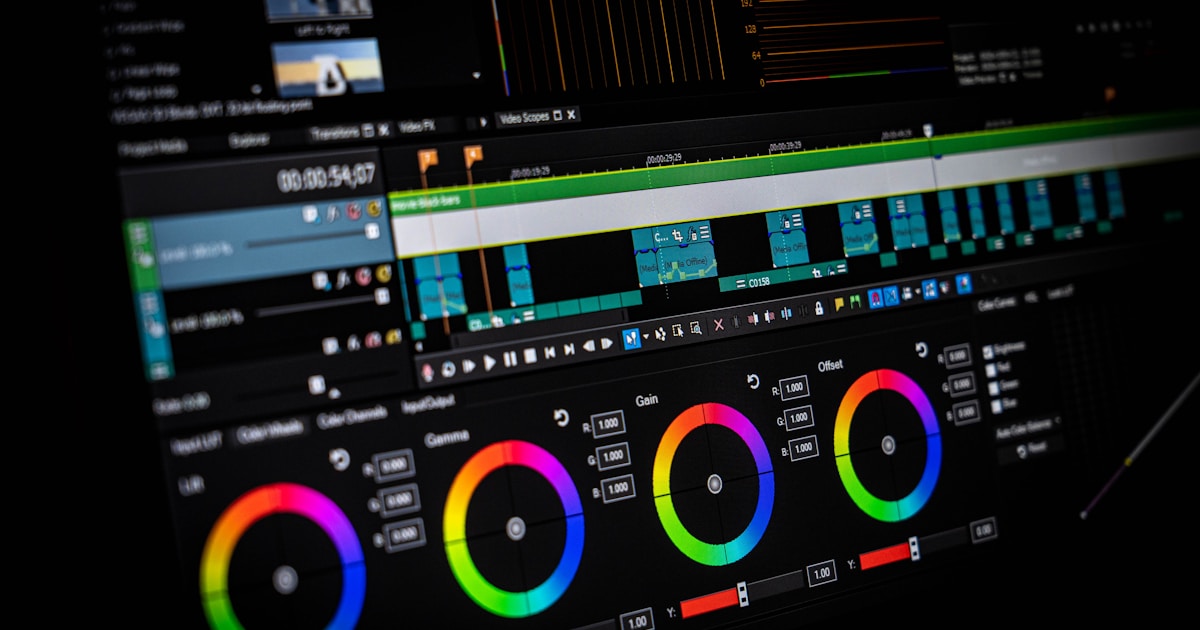
The fourth block is the edit: you drop the clips in order, lay down the voice, music, and subtitles, then export in the right format.
Budget 45 minutes to 2 hours for your first complete ad, then 20 to 30 minutes once you've got the method down. The real win isn't the speed of a single spot — it's being able to produce five variations to test which one converts.
Method 1: Create Your Video Ad in the Skilzy AI Lab
This is the most direct route for a beginner: one account, one subscription, and all the video, voice, and music tools already plugged in together. The main obstacle when you start out isn't technical difficulty, it's the pile-up: one subscription for video generation, another for voice, a third for music, and €80 a month gone before you've published anything at all.
Skilzy brings together the two missing pieces: the training that tells you what to do, and the built-in AI Lab where you use the real tools with credits included. The program dedicated to creating video ads with AI walks you through producing a complete spot from script to export, with prompts already written for you to adapt to your product.
A typical run looks like this:
- You describe your product, your audience, and your offer in the Lab.
- You generate three different script angles and keep the clearest one.
- You generate the shots one by one, rewording the prompts that don't deliver.
- You add the voiceover and the music.
- You export in 9:16 for Reels and TikTok, then in 1:1 or 16:9 for everything else.
On the budget side, access starts at €29.90 a month, no commitment. To look before you pay, the free discovery demo gives you 7 days with 1 image, 1 video, 1 music track, and 10 messages, with no credit card: enough to understand how it works and check that the output suits you.
Two state-recognized certifications round out the setup, including the RS7439 certification in AI content marketing registered with France Compétences — useful if you want to get your upskilling funded.
Method 2: Assemble the Specialized Tools Yourself
You can absolutely do everything by hand by subscribing to the tools directly, as long as you're willing to be your own project manager. This method gives you maximum control over quality, and it's the one creators use when they're producing ads at scale.
The most common combination in 2026:
| Block | Common tools | Monthly price range |
|---|---|---|
| Script | ChatGPT, Claude | €0 to €23 |
| Video shots | Veo, Runway, Kling, Luma | €20 to €100 |
| Voiceover | ElevenLabs, Cartesia | €5 to €25 |
| Music | Suno, Udio | €8 to €24 |
| Editing | CapCut, DaVinci Resolve | €0 to €20 |
Things to watch out for. First, consistency: from one clip to the next, the same character's face changes and the same product's label changes. The fix is to start from a fixed reference image and then animate it, rather than generating each shot from scratch.
Next, commercial rights. Not every subscription allows advertising use, especially free plans, which often add a watermark. Check the terms of use before launching a paid campaign.
Finally, the real cost. A failed generation burns credits anyway, and you should count on three to five attempts per shot at the beginning. That's the expense beginners systematically underestimate.
If your target format is a talking-head testimonial rather than a cinematic spot, look instead at UGC video created with AI, which uses talking avatars and often costs less in credits.
Method 3: Shoot on Your Phone and Let AI Finish the Job
The hybrid method gives the best results for physical products: you shoot 30 seconds of real footage on your phone, and AI handles everything else. It's free on the filming side, and it solves the credibility problem in one move, since your product actually appears as it really is.
In practice:
- Shoot 5 to 8 short takes in 9:16, in daylight, near a window: the product in your hand, the unboxing, real-world use, a close-up on a detail.
- Import everything into an editor, then let the AI generate automatic subtitles, cut out the silences, and propose a first assembly.
- Add a synthetic voiceover if you don't like your own voice, or record it yourself.
- Fill in with one or two AI-generated shots for settings you can't film: a beach, a New York office, an aerial view.
This approach demands real attention to sound. A phone's built-in mic is fine at less than a meter, and disastrous at three meters in a room that echoes. If you're speaking on camera, get closer or use a €20 lavalier mic. For the assembly part, our guide to video editing with AI details what these automatic features do well, and where they still fall short.
The Script, the Formats, and the Mistakes That Sink Your Results
A video ad that works follows a four-block structure: hook, problem, proof, action. Here's the template to copy for a 20- to 30-second spot.
Block 1, the first 3 seconds. A sentence or an image that stops the thumb. No logo, no intro. Example: “Your coffee goes cold in 8 minutes.”
Block 2, seconds 3 to 10. You name the concrete frustration, using words your customer would actually use.
Block 3, seconds 10 to 22. You show the product in action and give proof: a number, a before/after, a review.
Block 4, the last 5 seconds. One single action requested, displayed on screen and spoken out loud.
As for formats, the standard durations are still 6 seconds for a non-skippable bumper, and 15 and 30 seconds for social formats. The official Google Ads video format documentation details the specific constraints for YouTube. Export at 1080 x 1920 pixels for vertical formats, in H.264, and always plan a version with burned-in subtitles: most mobile views happen with the sound off.
The most common beginner mistakes: generating a 30-second spot in one block instead of six short clips; putting the logo at the start; stacking spectacular shots without ever showing the product; producing only one version, which makes it impossible to know which hook works. Make three, run them on a small daily budget, and keep the one that performs.
Key Takeaways
An AI video ad comes down to four building blocks and a solid script. Start with method 1 if you want structure and a single subscription, move to method 2 when you're producing at volume, and keep method 3 in your back pocket whenever your product is physical. In every case, the first version is never the right one: publishing three variations and watching the numbers is how you learn fastest. Once your spot is ready, also think about automating publishing to social media so you don't lose the time you just saved.